Fill out Form 1041-T Online in 2026
Allocate estimated tax payments to beneficiaries with ease
Get Form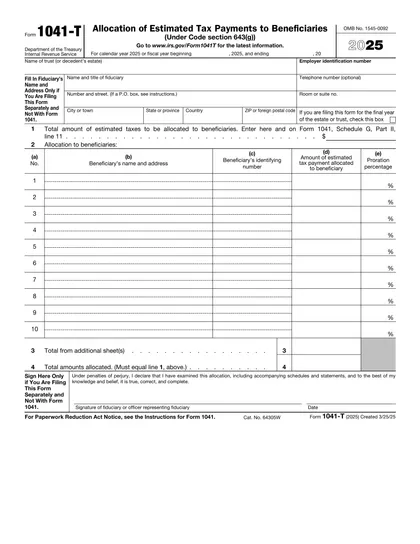
This site is not affiliated with any government, tax, or other official agency. Form last updated: 07/2026. Please verify you are using the current, correct version for your situation before submitting it.
How it works
1. Open the form
Access the pre-loaded form directly in our PDF editor. No need to upload anything!
2. Fill in your details
Carefully complete all required fields to ensure accuracy and validity.
3. Download as PDF
Save your filled-out form in PDF format, ready for submission or other needs.
What is Form 1041-T?
Form 1041-T, Allocation of Estimated Tax Payments to Beneficiaries, is used by estates and trusts to distribute estimated tax payments among its beneficiaries. This form helps ensure that each beneficiary receives their fair share of tax credits from the estate or trust’s estimated payments. It’s important because it allows beneficiaries to benefit from tax payments made on their behalf, potentially reducing their tax liabilities when they file their own returns. Properly completing this form can help avoid confusion and ensure correct tax reporting.
What is Form 1041-T used for?
Form 1041-T is used by estates and trusts to allocate estimated tax payments to beneficiaries. Here's what it helps accomplish:
- to report estimated tax payments made.
- to allocate these payments among beneficiaries.
- to help beneficiaries determine their tax obligations.
How to fill out Form 1041-T?
Read the instructions for Form 1041-T carefully to understand the requirements for allocating estimated tax payments.
Enter the trust’s information, including the name and taxpayer identification number.
Complete the estimated tax payments section, ensuring amounts are accurate.
List each beneficiary’s name, identifying number, and the amount allocated to them.
Review the entire form for accuracy and completeness.
Check official sources for the latest signature requirements to ensure compliance.
Who is required to fill out Form 1041-T?
Form 1041-T is completed by estates and trusts allocating estimated tax payments to beneficiaries. Executors and trustees are responsible for this process.
Beneficiaries of the estate or trust use the form to report their share of estimated tax payments on their individual tax returns.
When is Form 1041-T not required?
If a trust or estate does not owe estimated taxes, it does not need to file Form 1041-T. Additionally, if the estate's income is below the required filing threshold, beneficiaries won’t require allocation of estimated tax payments.
Also, if all beneficiaries are tax-exempt organizations or if the estate is not distributing income, Form 1041-T is unnecessary. Always consult IRS guidelines for specific situations.
When is Form 1041-T due?
The deadline for Form 1041-T is the 65th day after the close of the tax year for the fiduciary return. For a calendar year, this typically falls on March 6 of the following year. If the due date falls on a weekend or holiday, it is filed on the next business day.
How to get a blank Form 1041-T?
To get a blank Form 1041-T, Allocation of Estimated Tax Payments to Beneficiaries, simply visit the IRS website, as they issue this form. Our platform has a pre-loaded version ready for you to fill out and download.
How to sign Form 1041-T?
To sign Form 1041-T, Allocation of Estimated Tax Payments to Beneficiaries, open the form in CookPDF's editor. Fill in all necessary fields, ensuring accuracy. After completing the form, create a simple electronic signature using the tools provided in CookPDF.
Once your signature is ready, place it in the designated area on the form. Remember to consult official sources for specific signature requirements, as these can vary based on your situation. After signing, download the completed form for your records.
Where to file Form 1041-T?
Filing Form 1041-T can be done by mail. You should send it to the address specified in the form instructions based on your location.
Currently, this form cannot be filed online. Make sure to double-check all entries to avoid delays in processing.