Fill Out Form T1255 Online in 2026
Designate a property as a principal residence for a deceased person
Get Form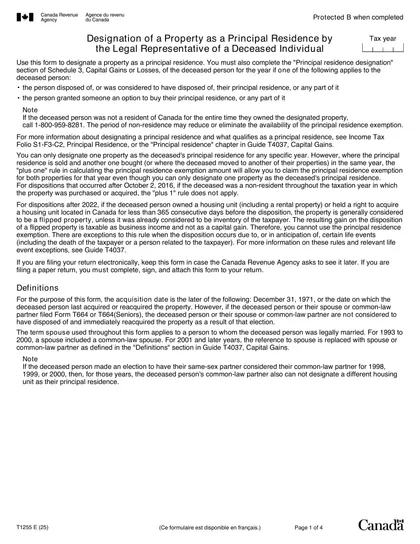
This site is not affiliated with any government, tax, or other official agency. Form last updated: 07/2026. Please verify you are using the current, correct version for your situation before submitting it. This is not a substitute for the advice of a qualified attorney.
How it works
1. Open the form
Access the pre-loaded form directly in our PDF editor. No need to upload anything!
2. Fill in your details
Carefully complete all required fields to ensure accuracy and validity.
3. Download as PDF
Save your filled-out form in PDF format, ready for submission or other needs.
What is Form T1255?
Form T1255 is essential for the legal representative of a deceased person to officially designate a property as the deceased's principal residence. This designation plays a key role in determining whether the sale of the property is exempt from capital gains tax. Accurately filling out this form ensures that the years the deceased owned the property are properly documented, which can significantly influence any taxes owed or refunded. Completing Form T1255 is vital for correct tax reporting and for maximizing potential tax exemptions.
What is Form T1255 used for?
Form T1255 is important for handling a deceased person's property. Here’s what it’s used for:
- Designating a Property as Principal Residence: Identify the property as the main home of the deceased for tax purposes.
- Calculating Capital Gain: Calculate the capital gain based on the years the property was the principal residence.
- Reporting to CRA: Report this designation and capital gain to the Canada Revenue Agency (CRA) for tax purposes.
How to fill out Form T1255?
Provide Property Information: Enter the address, year of acquisition, and proceeds of disposition for the property.
Designate Principal Residence: Specify the years the property was the principal residence of the deceased.
Calculate Capital Gain: Determine the number of tax years designated and owned, and calculate any pre-1982 and post-1981 gains.
Complete Form Sections: Fill out all required sections, ensuring all calculations are included.
Submit Form: Review all information for accuracy before finalizing your form.
Who is required to fill out Form T1255?
The legal representative of a deceased individual, such as an executor, administrator, or liquidator in Quebec, is responsible for completing Form T1255.
After completing Form T1255, the legal representative uses it to report the designation of the property as the deceased's principal residence, including it with the income tax return to calculate any capital gain.
When is Form T1255 not required?
Form T1255 isn't required if the deceased's property was their principal residence for all years owned, and no capital gain calculation is necessary. It also isn't needed if the deceased did not designate the property as a principal residence while alive. Additionally, if another form, such as t2091, designated the property as a principal residence, then T1255 is not necessary.
When is Form T1255 due?
The deadline for Form T1255 is when the final tax return for the deceased individual is due. This typically occurs within six months after the date of death. If the property was disposed of during the tax year, Form T1255 must be completed and attached to the final tax return. Additionally, the legal representative needs to fill out Schedule 3 to report any capital gains or losses.
How to get a blank Form T1255?
To get a blank Form T1255, simply visit our website. The Canada Revenue Agency issues this form, and we have it pre-loaded in our editor for you to fill out. Remember, CookPDF aids in filling and downloading forms, but not filing them.
How to sign Form T1255 online?
To sign Form T1255, you can use an electronic signature that meets Canadian laws, ensuring it shows intent, is attached to the document, and maintains record integrity. A simple electronic signature or a handwritten signature is acceptable. After completing the form with CookPDF, remember to download it for your records. Always check for the latest updates to ensure compliance, as CookPDF does not support submission.
Where to file Form T1255?
Form T1255 must be filed along with the tax return for the year when the property was sold. You can submit it by mail or include it with your paper tax return.
If you choose to file electronically, remember to keep the form for your records. The Canada Revenue Agency may request it later for verification.