Fill out Schedule B (Form 1040) Online in 2026
Report your interest and dividend income accurately
Get Form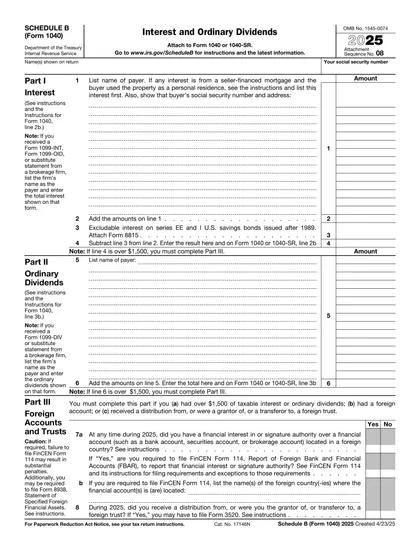
This site is not affiliated with any government, tax, or other official agency. Form last updated: 07/2026. Please verify you are using the current, correct version for your situation before submitting it.
How it works
1. Open the form
Access the pre-loaded form directly in our PDF editor. No need to upload anything!
2. Fill in your details
Carefully complete all required fields to ensure accuracy and validity.
3. Download as PDF
Save your filled-out form in PDF format, ready for submission or other needs.
What is Schedule B?
Schedule B from Form 1040 is used to report interest and ordinary dividends you received during the tax year. It's important because it helps the IRS track your income from investments, ensuring you pay the correct amount of taxes. If you earned over $1,500 in interest or dividends, or if you have foreign accounts, you must file this schedule. Accurate reporting can prevent issues with your tax return and help you avoid penalties.
What is Schedule B used for?
Schedule B is used to report interest and ordinary dividends. Here’s what it’s for:
- to report interest income.
- to report ordinary dividends.
- to determine taxable income.
- to provide details for IRS review.
How to fill out Schedule B (Form 1040)?
Gather your interest and dividend statements from banks and companies.
Locate Part I for interest income and Part II for dividends on Schedule B.
Enter the total interest income from all sources in Part I.
List each dividend and its amount in Part II, noting any qualified dividends.
Check if you need to answer the foreign accounts question.
Review all entries for accuracy before proceeding with your return.
Who is required to fill out Schedule B from Form 1040?
Schedule B is for individuals who earn interest and ordinary dividends. This includes taxpayers reporting income from savings accounts, investments, or dividends from stocks.
Taxpayers must submit this form to the IRS when filing their annual income tax returns.
When is Schedule B not required?
If your total interest and ordinary dividends are $1,500 or less, you don’t need to file Schedule B. Also, if all your interest is from certain tax-exempt obligations, you can skip this form. Lastly, if you have no foreign accounts or if your dividends are from qualified sources, Schedule B isn’t necessary. Always check the latest IRS guidelines to confirm your eligibility.
When is Schedule B from Form 1040 due?
The deadline for Schedule B is the same as your federal tax return, which is typically April 15. If that day falls on a weekend or holiday, the deadline may shift to the next business day.
It's important to file Schedule B if you have interest or ordinary dividends to report. Make sure to gather all necessary documents, such as 1099 forms, before completing it to ensure accuracy.
How to get a blank Schedule B?
To get a blank Schedule B (Form 1040), simply visit our website and click on the option to fill the form. The blank version will load in our editor, allowing you to fill it out conveniently and download it for your records.
Do you need to sign Schedule B?
Schedule B does not require a signature according to official sources. However, you should check with the IRS for the latest updates on filing requirements.
It's always wise to verify the most recent guidelines to avoid any misunderstandings. Staying informed can help minimize liability for any misinformation.
Where to file Schedule B from Form 1040?
You can file Schedule B online using tax software or by mailing a paper form to the IRS. Make sure to include it with your Form 1040.
If you choose to mail it, send it to the address specified in the Form 1040 instructions. Always keep a copy for your records.