Fill out Schedule K (Form 990) Online in 2026
Fill out your supplemental information on tax-exempt bonds
Get Form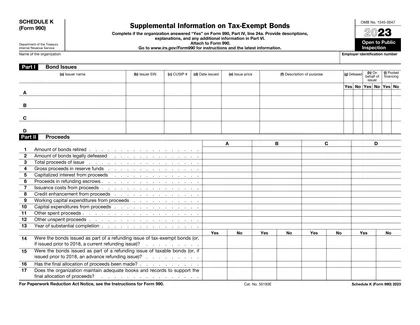
This site is not affiliated with any government, tax, or other official agency. Form last updated: 07/2026. Please verify you are using the current, correct version for your situation before submitting it.
How it works
1. Open the form
Access the pre-loaded form directly in our PDF editor. No need to upload anything!
2. Fill in your details
Carefully complete all required fields to ensure accuracy and validity.
3. Download as PDF
Save your filled-out form in PDF format, ready for submission or other needs.
What is Form Schedule K?
Schedule K (Form 990) is a document that tax-exempt organizations must file to report information about their tax-exempt bonds. This form helps the IRS understand how these organizations use their bonds and ensure compliance with tax laws. It includes details like the types of bonds issued and financial data related to them. Filing Schedule K is important as it promotes transparency and accountability, helping to maintain the integrity of tax-exempt status for organizations involved in financing public projects.
What is Schedule K (Form 990) used for?
Schedule K provides information on tax-exempt bonds. It is used by organizations to report important details about these financial instruments:
- to report bond issuance.
- to disclose proceeds used.
- to indicate compliance with tax rules.
How to fill out Schedule K?
Read the instructions attentively.
Identify the required fields for your organization’s tax-exempt bonds.
Enter accurate information regarding bonds issued, proceeds, and usage.
Review your entries for errors or omissions.
Consult with a tax professional if you have questions about specific entries.
Check for updates on IRS guidelines before finalizing the form.
Who is required to fill out Schedule K (Form 990)?
Organizations that issue tax-exempt bonds must complete Schedule K for compliance and reporting. This includes municipalities and non-profit entities managing these bonds.
After completion, tax-exempt bond issuers and the IRS use the form for transparency and regulatory purposes.
When is Schedule K not required?
Schedule K (Form 990) isn't necessary for all organizations. If your tax-exempt organization doesn't have any tax-exempt bonds or if you don’t incur any debt obligations related to those bonds, there's no need to file this schedule.
Additionally, organizations that don't receive tax-exempt bond proceeds or don't engage in activities related to these bonds are exempt from this requirement. Always check the latest IRS guidelines to confirm your specific situation.
When is Schedule K (Form 990) due?
The deadline for Schedule K, is the 15th day of the 5th month after the end of your organization’s tax year. For most organizations that follow the calendar year, this means the due date is May 15.
If you need more time, you can file for an extension, which gives you an additional six months. It's important to file on time to avoid penalties and maintain your tax-exempt status.
How to get a blank Schedule K?
To get a blank Schedule K, just visit our website. The form is pre-loaded in our editor, ready for you to fill out.
Alternatively, the form is available for download on the IRS website.
Do you need to sign Schedule K?
Schedule K does not require a signature according to official sources. However, it's always wise to confirm this with the IRS for any updates.
Where to file Schedule K?
It must be submitted with Form 990 to the IRS.
You can file Schedule K either by mail or electronically through authorized e-file providers. Ensure you follow the guidelines for accurate submission.